

Royalty Ridge

Phone : (307) 463-7776

When you buy a property, it is natural to assume that owning the land means owning everything above and below it.

In Texas, that assumption can be wrong.

Property ownership can be divided into separate surface and mineral estates. One person may own the surface of a property while another person owns some or all of the minerals beneath it. This separation is particularly important in areas with a long history of oil and gas development.

Understanding the difference between mineral rights and surface rights can help landowners, mineral owners, and potential buyers better understand what they own, what they may be entitled to, and why reviewing property records matters.

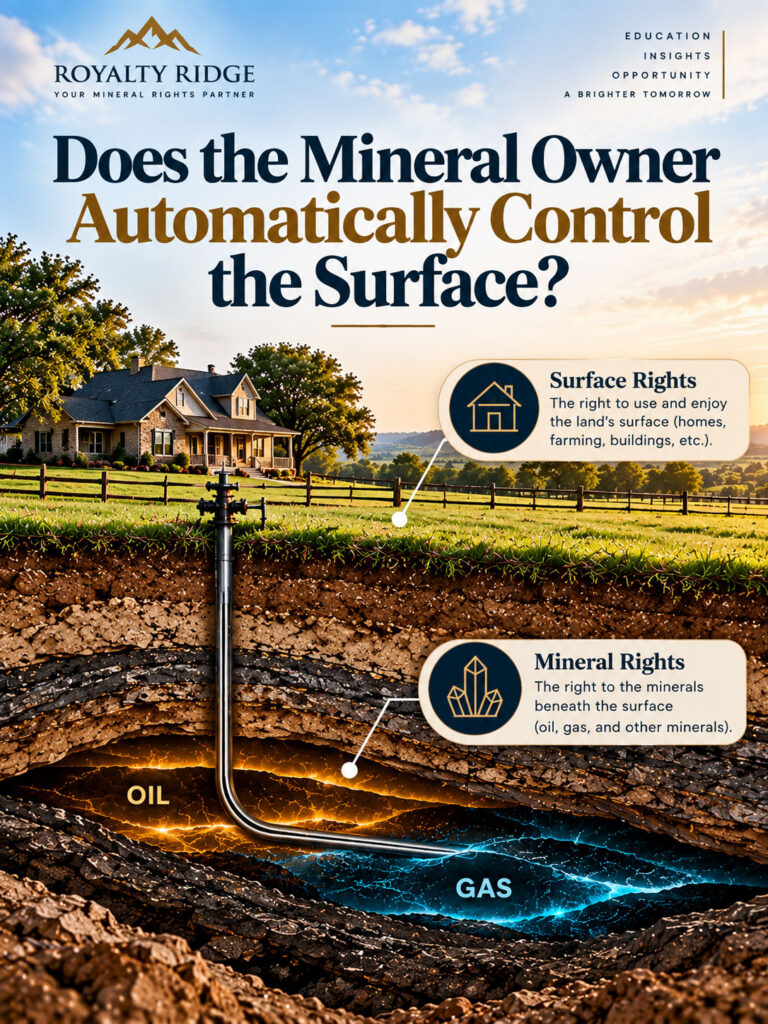
Surface rights generally refer to rights associated with the surface estate—the portion of property used for homes, agriculture, roads, buildings, landscaping, and other surface activities.

A surface owner may use and possess the surface of the property, subject to other valid property interests, easements, leases, restrictions, and applicable law.

For example, a surface owner may use the land for:

  • A residence
  • Farming or ranching
  • Roads and driveways
  • Buildings and other improvements
  • Landscaping
  • Certain commercial activities

However, owning the surface does not necessarily mean owning the oil and gas beneath it.

That is because the mineral estate may have been separated from the surface estate through a previous deed, reservation, or other conveyance.

#MineralRights #SellMineralRights #MineralOwners #RoyaltyRidge #OilAndGas #MineralRightsEvaluation #EnergyAssets #RoyaltyInterests #Landowners #TexasMinerals

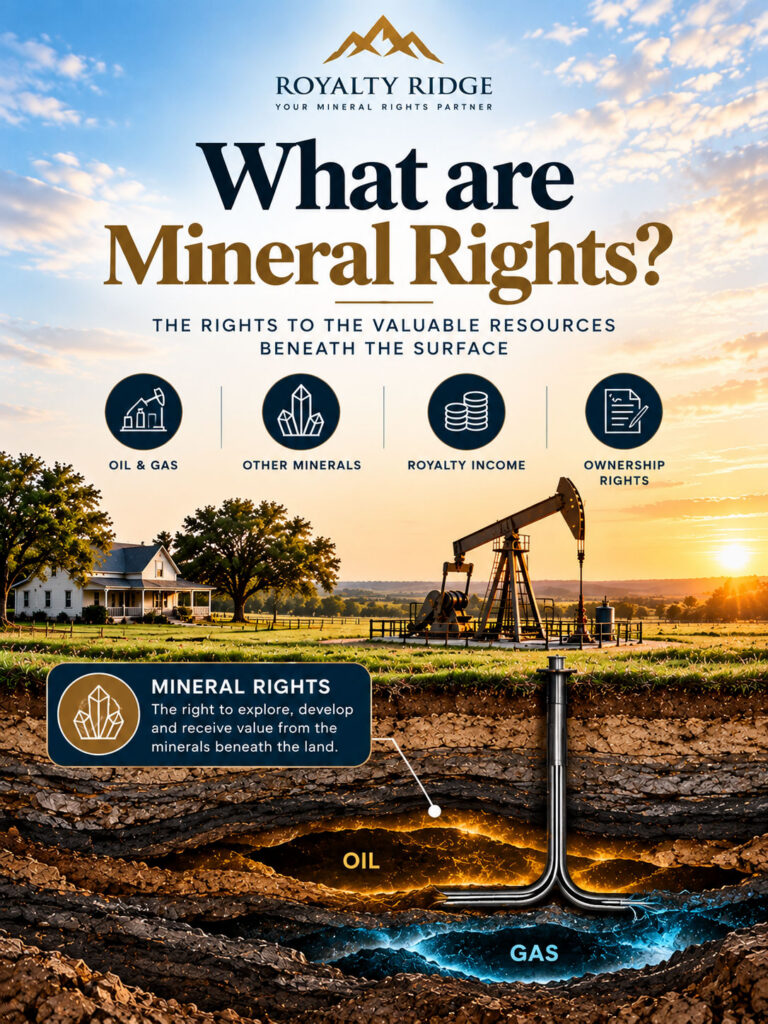
Mineral rights refer to ownership rights associated with minerals beneath a property.

In Texas, oil and gas are considered minerals. The Texas General Land Office explains that a landowner who owns both the land and minerals can separate the two estates by conveying or reserving the mineral interest.

Depending on the documents involved, a mineral estate may include rights associated with:

  • Exploration
  • Development
  • Production
  • Leasing
  • Royalty interests
  • Certain rights to access and use the surface for mineral development

The exact scope of these rights depends on the relevant deeds, leases, reservations, and other legal documents.

#MineralRights #SellMineralRights #MineralOwners #RoyaltyRidge #OilAndGas #MineralRightsEvaluation #EnergyAssets #RoyaltyInterests #Landowners #TexasMinerals

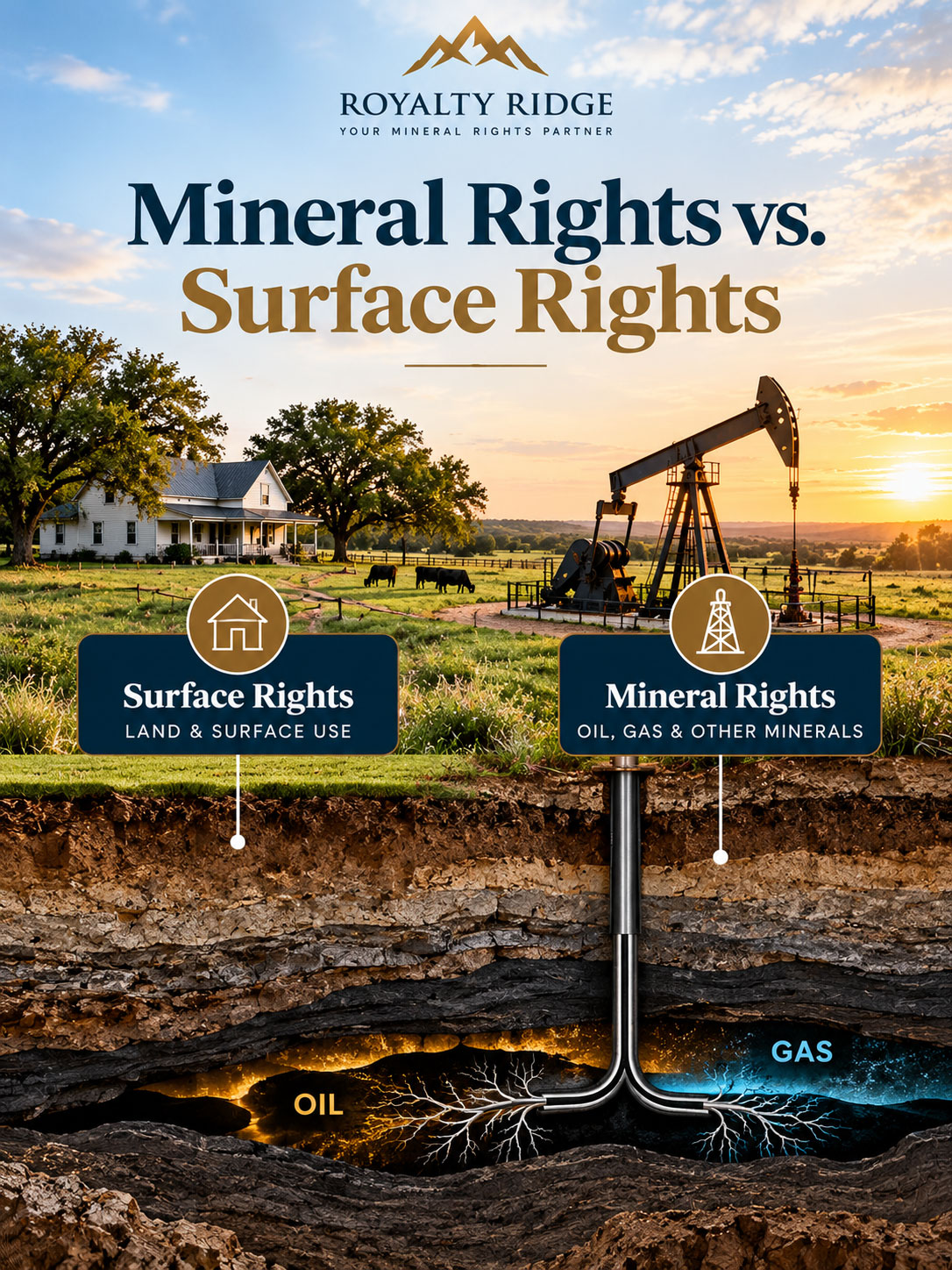
Think of a property as having two layers of ownership:

SURFACE ESTATE
Land, buildings, roads, agriculture and other surface uses

⬇️

MINERAL ESTATE
Oil, gas and other minerals beneath the property

These two estates may belong to the same owner or to different owners.

Texas law specifically recognises these as distinct estates.

Yes.

This is one of the most important concepts for Texas property owners to understand.

Suppose an owner has 100 acres and owns both the surface and mineral estate.

The owner could sell the property but reserve the mineral rights.

The result could be:

Buyer → Surface Estate

Seller → Mineral Estate

The Texas Railroad Commission explains that this type of separation, known as severance, occurs when an owner sells the surface while retaining all or part of the minerals. The reverse arrangement can also occur, although it is less common.

This means the person receiving the deed to the land may not automatically receive all mineral rights.

A mineral estate is the ownership interest in the minerals associated with a property.

A Texas Real Estate Commission mineral-estate addendum describes the mineral estate as potentially including oil, gas, other minerals, royalties under mineral leases, executive rights, and certain exploration, development, production, and access rights. The exact rights conveyed in a particular transaction depend on the applicable documents.

This is why simply saying “I own the minerals” may not tell the entire story.

An owner could have:

  • A full mineral interest
  • A fractional mineral interest
  • A royalty interest
  • A leased mineral interest
  • Another specifically defined interest

The legal documents determine the actual rights.

What Happens When Mineral Rights Are Leased?

A mineral owner may lease mineral rights to an oil and gas company.

The company that takes the lease and conducts operations is commonly referred to as the lessee, while the mineral owner granting the lease is the lessor.

A lease can give the lessee rights associated with exploring for and producing oil and gas.

Depending on the lease and applicable law, those rights may include reasonable use of portions of the surface for activities such as:

  • Drilling wells
  • Building access roads
  • Installing pipelines
  • Conducting seismic operations
  • Operating production facilities

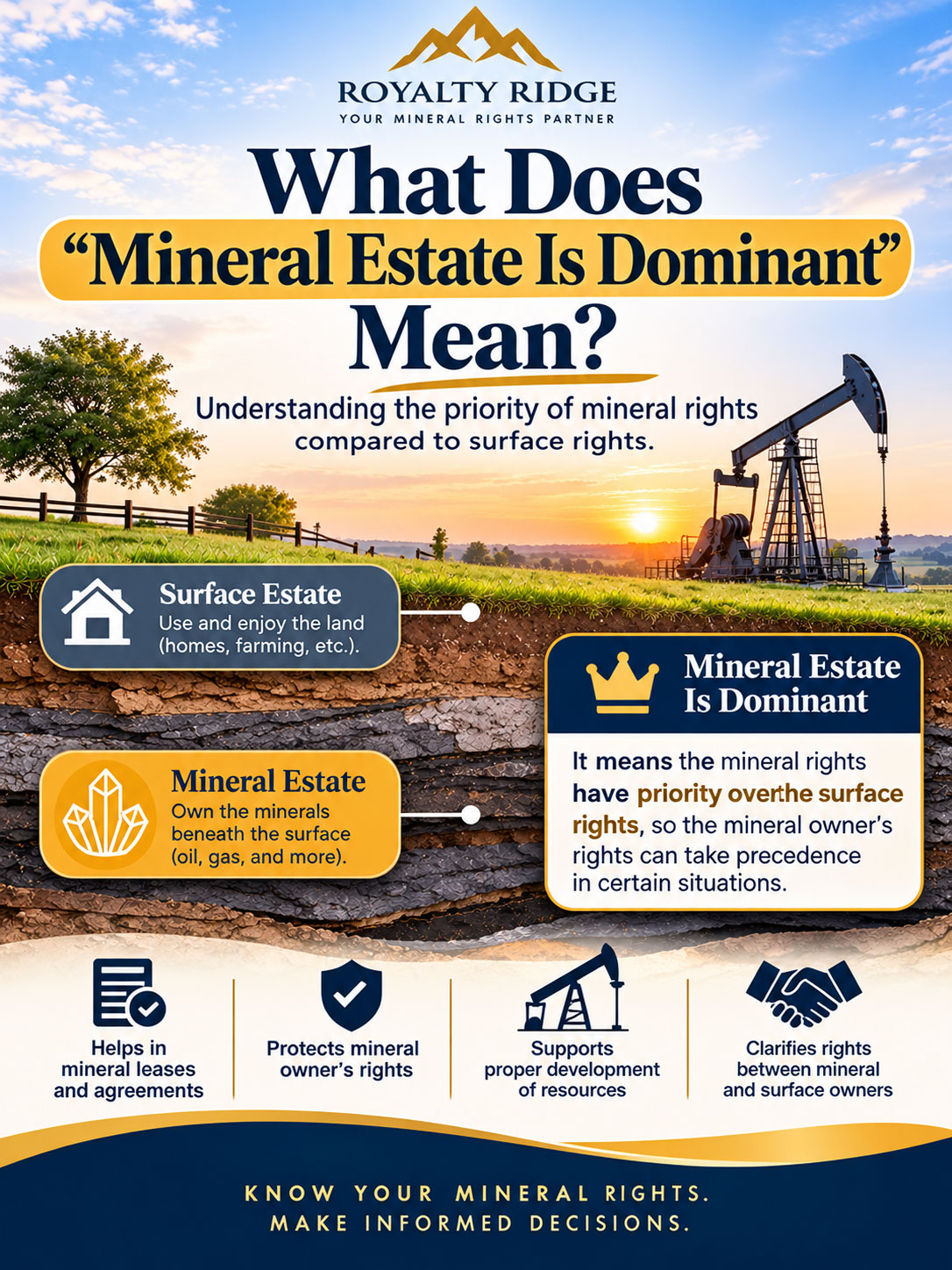
The Railroad Commission of Texas notes that the mineral estate is generally considered dominant in Texas, meaning mineral development can carry certain rights to reasonably use the surface. However, those rights are subject to limitations, including the specific terms of the lease or deed and certain legal doctrines.

Not exactly.

The mineral estate’s dominant status does not mean a mineral owner has unlimited freedom to use the surface however they want.

Texas law generally recognises a right to reasonably use the surface for mineral exploration, development, and production. But the scope of that right can be affected by:

  • Lease language
  • Deed language
  • Surface-use agreements
  • Local regulations
  • The accommodation doctrine
  • Whether the activity is reasonable or excessive

The Railroad Commission specifically notes that lease and deed provisions can modify the general rules regarding surface use.

The Texas Bar Journal also discusses how modern development can create competing interests between surface owners, mineral owners, and other subsurface interests.

#MineralRights #SellMineralRights #MineralOwners #RoyaltyRidge #OilAndGas #MineralRightsEvaluation #EnergyAssets #RoyaltyInterests #Landowners #TexasMinerals

This phrase can sound more complicated than it is.

In Texas, the general rule is that the mineral estate has certain implied rights to reasonably use the surface when necessary to explore for and produce the minerals.

For example, an operator may need surface access to:

Access the property

↓

Construct a drilling location

↓

Drill and complete a well

↓

Install necessary facilities

↓

Produce and transport oil or gas

The purpose is to allow the mineral estate to be developed.

However, “dominant” does not mean unlimited. Specific documents and applicable law can impose restrictions, and unreasonable or excessive use can create legal issues.

#OilAndGas #OilGasRoyalty #RoyaltyEvaluation #MineralRights #MineralOwners #MineralRightsExperts #OilAndGasInvesting #EnergyInvestments #RoyaltyInterests #OilAndGasIndustry #EnergyAssets #MineralAssetManagement #RoyaltyIncome #OilAndGasServices #EnergyConsulting #LandownerRights #MineralValuation #RoyaltyRidge #OilFieldServices #EnergyAdvisors For a more local SEO/social media mix: #TexasMinerals #TexasOilAndGas #PermianBasin #EagleFord #Bakken #Haynesville #USMineralRights #AmericanEnergy #EnergyMarket #OilAndGasExperts

Mineral Rights vs. Surface Rights: Key Differences

Feature Surface Rights Mineral Rights
Primary focus
Surface land
Subsurface minerals
Can be separately owned?
Yes
Yes
Can be transferred separately?
Yes
Yes
May involve oil and gas?
Generally no
Yes
May generate royalties?
Not simply from surface ownership
Potentially
May involve drilling rights?
Generally not by itself
Potentially
Can affect the other estate?
Yes
Yes

The precise rights associated with either estate depend on the relevant title documents, leases, and applicable law.

A surface owner may be concerned about:

  • Well locations
  • Roads
  • Pipelines
  • Equipment
  • Noise
  • Agricultural operations
  • Property use
  • Surface damage

A mineral owner may be concerned about:

  • Leasing opportunities
  • Production
  • Royalty income
  • Drilling activity
  • Development potential
  • Mineral valuation

These interests can overlap but are not necessarily identical.

A property transaction does not always transfer both estates together.

The sale documents should clearly establish what is being conveyed and what is being reserved.

For example:

Scenario 1 — Surface Only

The seller transfers the surface estate while retaining mineral rights.

Scenario 2 — Surface + Minerals

The seller transfers both the surface and the mineral estate.

Scenario 3 — Partial Mineral Reservation

The seller transfers the property while retaining only a specified percentage or fraction of the mineral interest.

Scenario 4 — Previously Severed Minerals

The seller owns the surface but has no mineral interest because the minerals were previously conveyed to someone else.

This is why title review is important before assuming what a property transaction includes.

#MineralRights #SellMineralRights #MineralOwners #RoyaltyRidge #OilAndGas #MineralRightsEvaluation #EnergyAssets #RoyaltyInterests #Landowners #TexasMinerals

Determining mineral ownership generally requires reviewing the property’s chain of title.

Useful documents can include:

  • Deeds
  • Mineral deeds
  • Reservations
  • Assignments
  • Oil and gas leases
  • Probate records
  • Other recorded conveyances

The Texas General Land Office explains that county deed records are generally maintained by the county clerk and that determining mineral ownership requires examining the deed and lease records affecting the property.

For complicated ownership histories, a professional title examination may be necessary.

If you receive oil or gas royalty payments, understanding the difference between the mineral estate and surface estate can help you understand what your payments represent.

A royalty interest may be connected to mineral ownership and an oil and gas lease, but the exact nature of the interest depends on the relevant documents.

This becomes especially important if you are considering selling your mineral or royalty interest.

Before evaluating an offer, it is useful to understand:

  • What interest you own
  • The percentage or fraction you own
  • Whether the interest is producing
  • The applicable lease terms
  • Current royalty income
  • Production history
  • Whether additional development may be possible

Understanding the underlying asset is the foundation of a meaningful valuation.

The difference between mineral rights and surface rights is fundamental to understanding property ownership in Texas.

The surface estate generally relates to the land and its surface uses, while the mineral estate relates to the minerals beneath the property. These estates can be owned by different people because they can be separated through deeds and other conveyances.

For mineral owners, the key lesson is simple:

Do not assume you own what you have not verified.

Review the title. Understand the lease. Confirm your ownership interest. Then evaluate your options based on the actual asset you own.

For mineral owners considering a valuation or potential sale, Royalty Ridge provides educational resources to help owners better understand mineral and royalty interests and make informed decisions.

Frequently Asked Questions

Yes. In Texas, the surface estate and mineral estate can be severed and owned by different people.

Yes. Mineral rights can be separated from the surface estate and transferred independently.

Where the mineral estate has been leased for oil and gas development, the lessee may have rights to reasonably use the surface for exploration and production, subject to the lease, applicable law, and other limitations.

Not simply because they own the surface. Royalty rights depend on the applicable mineral ownership and lease arrangements.

Review the chain of title, including deeds, mineral reservations, mineral deeds, leases, and other recorded conveyances. Complex situations may require a professional title examination.

Scroll to Top