


Royalty Ridge

Phone : (307) 463-7776

How to Sell Mineral Rights: A Step-by-Step Guide

If you own mineral rights, you may have wondered whether you should continue collecting royalty payments or consider selling your interest for a lump-sum payment.

For many owners, the difficult part is not finding someone who wants to buy. It is understanding what you own, what it may be worth, and whether an offer makes sense for your situation.

Mineral rights are different from traditional real estate. Their value can be influenced by production, location, ownership percentage, lease terms, nearby drilling, operator activity, commodity prices, and future development potential.

At Royalty Ridge, we help mineral owners understand those factors before making a decision. Our approach is built around property-specific research, clear communication, and giving owners time to consider their options. 

This guide walks through the mineral rights selling process from the first step to closing.

What Does It Mean to Sell Mineral Rights?

Mineral rights represent an ownership interest in the minerals beneath a property’s surface. Depending on the ownership documents, those rights may include interests associated with oil, natural gas, and other minerals.

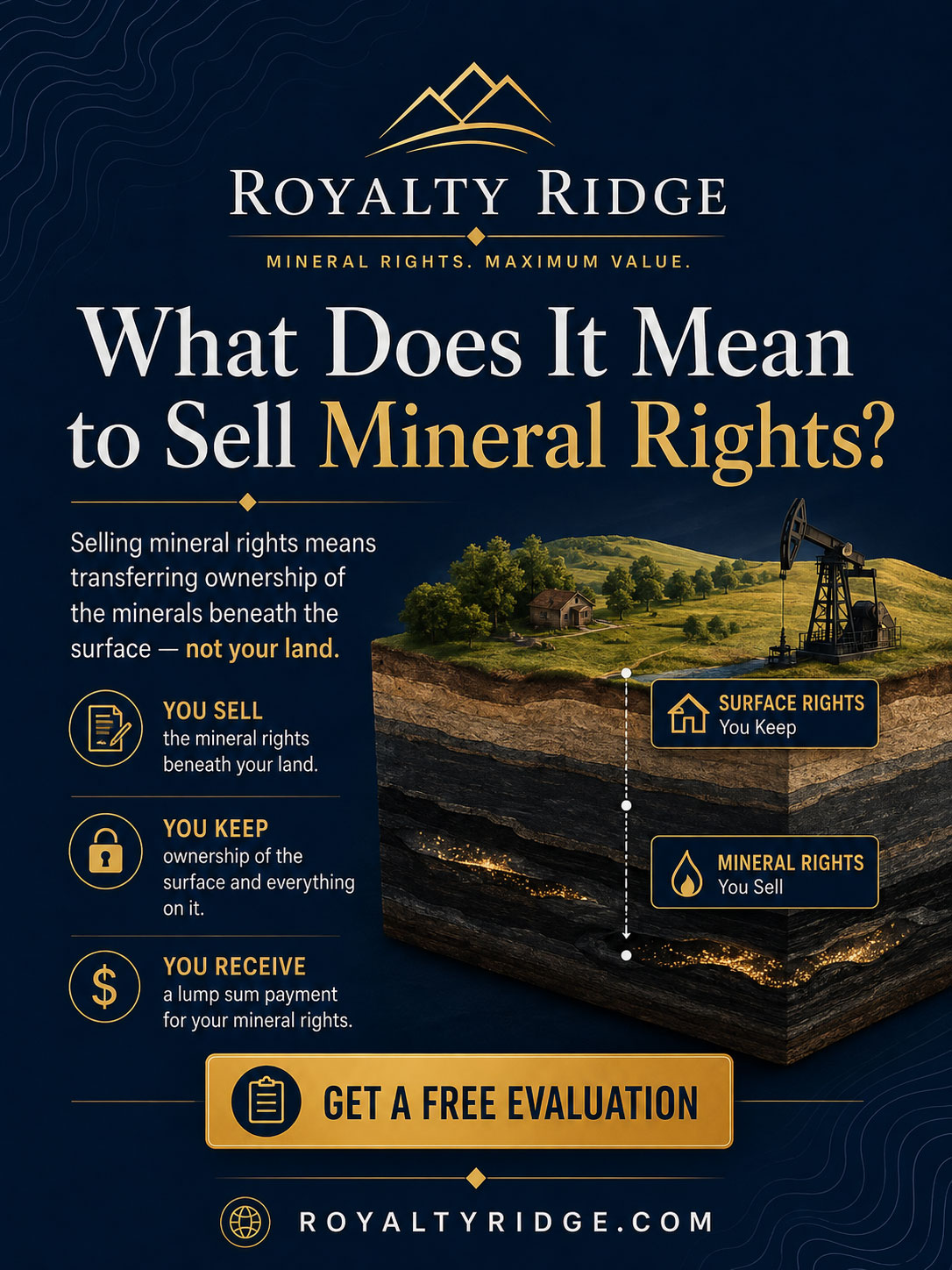
Mineral rights can be separate from surface rights. That means owning the land does not necessarily mean owning all of the minerals underneath it, and selling a mineral interest does not automatically mean selling the surface property.

Before entering a transaction, it is important to understand exactly what your deed or other ownership documents convey.

Royalty Ridge’s current process is designed to start with identifying where the mineral rights are located, researching the interest, providing an evaluation, and then helping with documents and closing if the owner chooses to move forward.


  • Determine What Mineral Rights You Own
  • Gather Your Mineral Rights Documents
  • Find Out Whether Your Minerals Are Producing
  • Understand What Affects Mineral Rights Value
  • Get a Mineral Rights Evaluation
  • Decide Whether to Sell All or Part of Your Interest
  • Compare Mineral Rights Offers Carefully
  • Complete Title Review and Closing
mineral rights buyers, mineral rights valuation, sell inherited mineral rights, sell producing mineral rights, sell non-producing mineral rights, mineral rights evaluation

What if You Inherited Mineral Rights?

Inherited mineral rights are common, but they can require additional ownership research.

You may need to determine:

  • Who originally owned the minerals
  • Who inherited them
  • Whether probate was completed
  • How many heirs are involved
  • What percentage each heir owns
  • Whether previous transfers were recorded

This can become more complicated when mineral rights have passed through several generations.

If you inherited mineral rights and are considering selling them, start by gathering whatever records you have. You do not need to understand every legal document before beginning the conversation.

For complicated estate, title, or tax questions, consult an appropriately qualified attorney or tax professional.

Can You Sell Mineral Rights Without Selling Your Land?

This is one of the most common questions mineral owners ask.

In many cases, mineral rights and surface rights are separate interests. Therefore, transferring a mineral interest does not necessarily mean transferring ownership of the surface property.

Royalty Ridge explains on its website that its transactions are focused on the mineral interest rather than the surface property. 

However, never rely on a general statement alone. Your specific deed, reservations, leases, and transaction documents determine what is actually being transferred.

Before signing, make sure you understand exactly what you are selling.

#MineralRights #SellMineralRights #MineralOwners #RoyaltyRidge #OilAndGas #MineralRightsEvaluation #EnergyAssets #RoyaltyInterests #Landowners #TexasMinerals

Why Do Mineral Owners Consider Selling?

There is no single reason to sell.

Some owners want a lump sum rather than continuing to receive unpredictable royalty payments. Others may be planning for retirement, simplifying an estate, paying significant expenses, diversifying investments, or simply reducing the responsibility of managing a mineral interest.

Royalty Ridge’s existing guidance identifies retirement planning, estate planning, debt or major expenses, unpredictable royalty income, and investment considerations among reasons owners may consider selling.

But selling is not automatically the right decision.

The better question is:

What makes the most sense for your financial situation and your expectations for the mineral interest?

An evaluation can help you understand the choices before you decide.

Where Royalty Ridge Helps Mineral Owners

Royalty Ridge works with mineral owners across major U.S. energy markets, including:

  • Texas
  • New Mexico
  • North Dakota
  • Montana
  • Oklahoma
  • Pennsylvania
  • Louisiana

The company focuses on mineral rights and royalty interests and describes its approach as straightforward, transparent, and centered on clear communication rather than pressure. 

Whether you own producing minerals in Texas, inherited rights in Oklahoma, non-producing interests in North Dakota, or oil and gas royalties elsewhere, the first step is understanding the asset.

Frequently Asked Questions

There is no fixed value. Location, net mineral acres, production, royalty rate, lease terms, nearby development, ownership, and market conditions can all affect value..

No. Depending on your ownership and the transaction, you may be able to sell a portion of your interest and retain the remainder.

Yes, but ownership generally needs to be established before the transaction can be completed. Estate and title records may be required.

Yes. Non-producing mineral interests may have value based on location, leasing activity, nearby wells, development potential, and other factors.

The timeline depends on the property, ownership records, title complexity, number of owners, and closing requirements. Straightforward transactions may move faster than interests involving complicated title or inheritance issues.

Scroll to Top